What a weekly pool service visit actually covers
Most of a good weekly visit is catching small things while they're still small, and the schedule matters more than people expect once the heat arrives.
October 20, 2026 · 4 min read
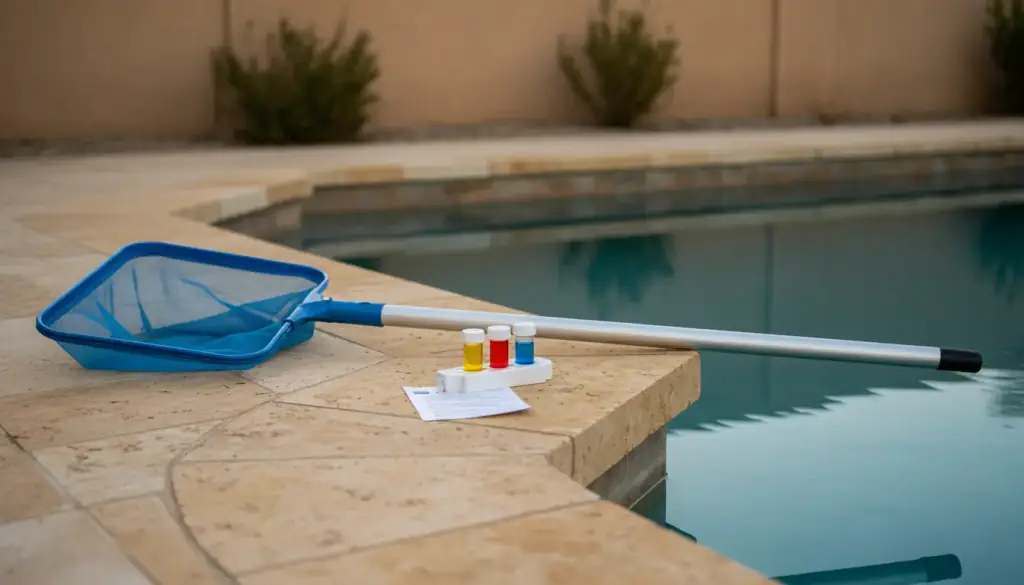
A pool that gets looked after every week looks like nothing is happening. The water stays clear, the baskets stay empty, and the pump hums along without drama. That's the whole idea. Most of what a weekly visit does is catch small things while they're still small, before they turn into a green pool or a burned-out pump. Here's what a proper visit covers, and why the schedule matters once the valley heats up.
It starts with a walk-around
Before anyone touches a net, a good technician looks at the pool the way you would if you were deciding whether to swim. Is the water clear enough to see the bottom drain? Is there a film on the surface, a ring at the waterline, a haze that wasn't there last week? Is the pump running, and does it sound the way it always does? Is the water level sitting about halfway up the skimmer opening?
That first look takes a minute and tells a lot. Cloudy water points at chemistry or the filter. A low water level can mean evaporation, which is normal in a dry summer, or a leak, which isn't. A pump that sounds different usually has something to say.
Skimming, brushing and baskets
Next comes the physical work. Leaves, bugs and blossoms get skimmed off the surface before they sink and start breaking down, because decaying plant matter feeds algae and uses up chlorine. The skimmer basket and the pump basket get emptied, since a full basket starves the pump of flow and makes the whole system work harder for less result.
Then the brushing. Walls, steps, corners and the shady side of the pool get scrubbed, because algae doesn't start in the middle of open water. It starts on a rough patch of plaster in a low-flow corner, where chlorine doesn't reach as well. A brush breaks up the early film so the sanitizer can deal with it. Finally the floor gets vacuumed for whatever has settled out.
Testing the water and adjusting it
This is the part that most separates a service visit from a quick skim. The water gets tested for chlorine, pH and alkalinity at the very least, and then adjusted based on what the test says rather than on what the last visit assumed. Chlorine is the sanitizer. The pH decides how well that chlorine works and how the water feels on skin and eyes. Alkalinity acts as a buffer that keeps the pH from swinging around.
Those readings move all the time. Swimmers, sunscreen, rain, a windy afternoon dumping dust into the pool, and especially sunlight, which burns chlorine off steadily all day. A pool that tested fine last Tuesday can be low on chlorine by Friday. Testing every visit means each adjustment is small and routine. Skipping it means the adjustment becomes a rescue.
Good service also means keeping track. When the pH keeps creeping up on one pool, the pattern points to a cause, and a cause can be fixed instead of chased week after week.
A quick look at the filter and equipment
While the technician is at the equipment pad, the filter gets a glance. A pressure gauge reading noticeably higher than it usually does suggests the filter is loading up with debris and needs cleaning. The pump lid, the o-ring and the fittings get checked for drips or air leaks. If anything looks worn, loose or wet where it shouldn't be, you hear about it now, while it's a small repair instead of a pump that quits in the middle of a heat wave.
A full filter clean is a separate job from the weekly visit, but the weekly look is what tells you when it's time for one.
Why weekly matters in a valley summer
Sun, heat and long days are hard on pool water. Sunlight burns chlorine off faster. Warm water gives algae exactly the conditions it likes. Evaporation concentrates whatever is dissolved in the water, and the pool gets used more. All of that shrinks the gap between fine and trouble.
In cooler months a pool can coast for a while. In a hot summer it often can't. A pool left alone for a couple of weeks in July can go from clear to cloudy to green in about the time it takes to go away for a long weekend. Once algae has taken hold, the fix means heavy shocking, extra filter running and days of cleanup, which costs more in chemicals and effort than the weekly visits that would have prevented it.
Weekly is also the schedule that keeps the work small. Each visit corrects a little drift and clears a little debris, so nothing piles up. That's why weekly cleaning is what's usually recommended for most residential pools in Visalia, Tulare, Hanford, Lemoore and Porterville.
What to ask for from any weekly service
- Water tested on every visit, with chlorine, pH and alkalinity adjusted from the actual readings
- Surface skimmed, skimmer and pump baskets emptied, walls and steps brushed, floor vacuumed
- A look at the filter pressure and the equipment pad, with anything unusual reported to you
- A plain account of what was done and what to keep an eye on before the next visit
Crystal Blue Pool Service and Spa has been family-owned and serving Tulare and Visalia for 15+ years, and weekly cleaning, chemical balancing, filter cleaning and equipment inspections are the core of the work. Pool cleaning starts at $130.00. Details are at /pool-maintenance, or call (559) 679-5599.
Crystal Blue Pool Service and Spa, (559) 679-5599
Call (559) 679-5599More articles
How a green pool gets brought back, and how to keep it from happening again
Green water looks like a disaster, but it follows a predictable recovery, and most of the work is in the order the steps happen.
Signs your pool filter needs cleaning, and what a filter clean involves
The filter works constantly and quietly, and when it's loaded up, your pool tells you in a handful of ways.