How a green pool gets brought back, and how to keep it from happening again
Green water looks like a disaster, but it follows a predictable recovery, and most of the work is in the order the steps happen.
October 20, 2026 · 4 min read
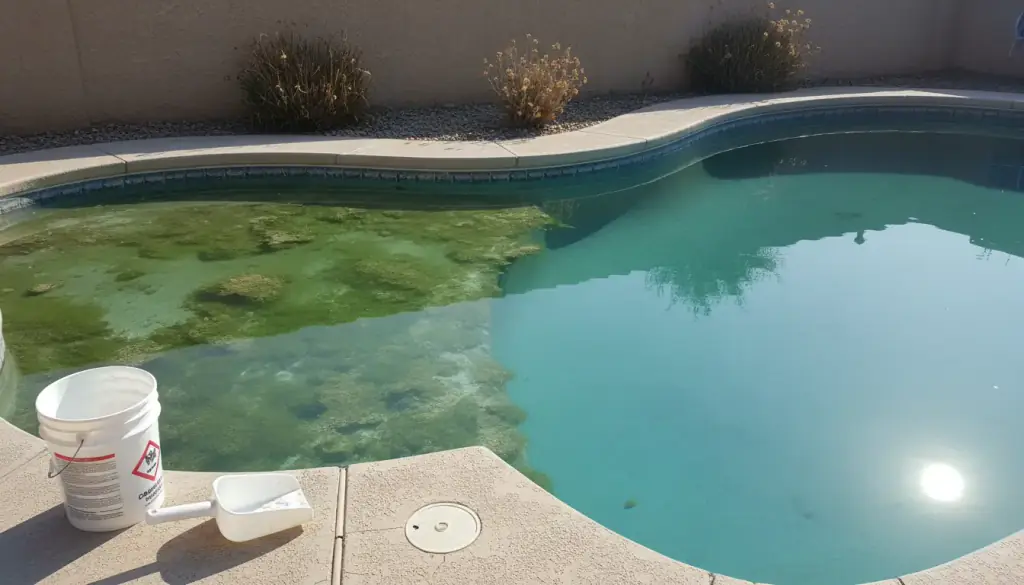
Nobody plans a green pool. You go away for a week, a storm blows through, the pump trips a breaker, or a busy stretch of summer simply gets away from you. Then you walk outside and the water looks like pea soup. The good news is that a green pool is almost always recoverable. The better news is that once you understand why it happened, it's usually not hard to keep it from happening again.
Why pools turn green so quickly
The green is algae, a living thing that was already in the pool in tiny amounts. Chlorine normally keeps it from taking hold. When the chlorine level drops, whether because the sun burned it off, a lot of debris used it up, or the circulation stopped, algae gets its chance. In warm weather it can multiply fast enough that water looking fine in the morning has a green tint by the weekend.
Heat helps it along, and so does a pH that has drifted too high, which makes chlorine work poorly even when there's plenty in the water. That's why a pool can be full of chlorine on paper and still turn green. Chemistry, circulation and sunlight all have to line up in algae's favor, and in a valley summer they often do.
The first step is a test, not a bucket of shock
It's tempting to dump in chemicals right away. A better start is a careful look and a proper water test. How green is it, and is the green only on the surface and walls, or is the whole pool opaque? What are the chlorine, pH and alkalinity readings? Is the pump actually running, and is the filter moving water?
The test tells you what the pool needs. If the pH is high, the chlorine you add will be less effective until that's corrected, so it often gets adjusted first. If the pump isn't circulating, no amount of chemical will do the job, because the treated water never gets to the filter. Treating a green pool without that information is guesswork, and guesswork is how people end up buying chemicals three weekends in a row.
Shock, algaecide and brushing
Once the chemistry is in range to work, the pool gets shocked with chlorine, which means raising the level high enough to kill the algae rather than just hold it back. An algaecide can be added as a second line of attack. Then comes the part people skip: brushing. Algae clings to plaster, and a brush loosens it so the chlorine can reach it. Walls, steps, corners and any shaded area get worked over.
The water usually gets worse before it gets better. Dead algae turns the pool cloudy, grayish or milky for a while, and that's a normal stage, not a sign it failed. The haze is now suspended debris, and it has to be removed physically.
The filter does half the work
Removing that debris is the filter's job, so the pump runs for long stretches during a recovery. The catch is that the filter fills up quickly with dead algae, and a clogged filter can't clear the water. Cleaning it partway through a recovery is normal, and sometimes it needs doing more than once.
Skimmer and pump baskets need emptying, too, and anything that settled to the floor gets vacuumed. In severe cases some of the water is vacuumed straight to waste so it doesn't pass back through the filter. People are often surprised how much of clearing a green pool is mechanical rather than chemical.
Settling pH and alkalinity
After the water starts to clear, the chemistry gets rebalanced. Shocking and heavy treatment push pH and alkalinity around, and a pool left unbalanced is just a pool waiting to turn green again. Once chlorine, pH and alkalinity are back where they belong, the water holds its clarity and feels comfortable to swim in. A follow-up test a few days later confirms that it's staying put.
Keeping it from coming back
Prevention is boring in the best way. Run the pump long enough every day for the water to circulate fully, because still water grows algae. Keep baskets and the filter clean. Test the water on a schedule and correct small drifts early. Brush the walls regularly. And after a heavy storm, a party, or a stretch of extreme heat, check the water that day instead of waiting for it to tell you something's wrong.
- Keep the pump running on a daily schedule so water moves through the filter
- Test chlorine and pH regularly, especially during heat waves and after storms
- Clean skimmer and pump baskets before they fill up
- Brush walls, steps and corners where water moves slowly
- Have the filter cleaned when the pressure gauge climbs
If you've got green water in Visalia, Tulare, Hanford, Lemoore or Porterville, Crystal Blue Pool Service and Spa handles green pool recovery as part of our pool work: inspecting, testing the chemistry, shocking with chlorine, adding algaecide, cleaning the filter and adjusting pH and alkalinity, with prevention tips to follow. See /green-pool-water or call (559) 679-5599.
Crystal Blue Pool Service and Spa, (559) 679-5599
Call (559) 679-5599More articles
What a weekly pool service visit actually covers
Most of a good weekly visit is catching small things while they're still small, and the schedule matters more than people expect once the heat arrives.
Signs your pool filter needs cleaning, and what a filter clean involves
The filter works constantly and quietly, and when it's loaded up, your pool tells you in a handful of ways.