Salt
A salt pool makes its own chlorine, and the cell behind it still needs looking after.
Salt level, pH and alkalinity checked every visit, the generator cell cleaned, and the filter taken care of, on the same stop as the rest of the pool.
Chapter 01
Salt takes the chlorine jug away, not the chores
Salt water pools get sold as the easy kind, and that is the idea that costs owners the most. The water is gentler on skin and eyes, and nobody is pouring jugs of liquid chlorine into the skimmer. But it is still a pool. Leaves still land in the basket, algae still looks for a weak week, and the chemistry still drifts.
In a Central Valley summer the drift is quick. Afternoon sun burns chlorine off, hard fill water leaves calcium along the tile line, and a salt pool that nobody tests for three weeks can slide out of balance while the water still looks fine from the patio chair.
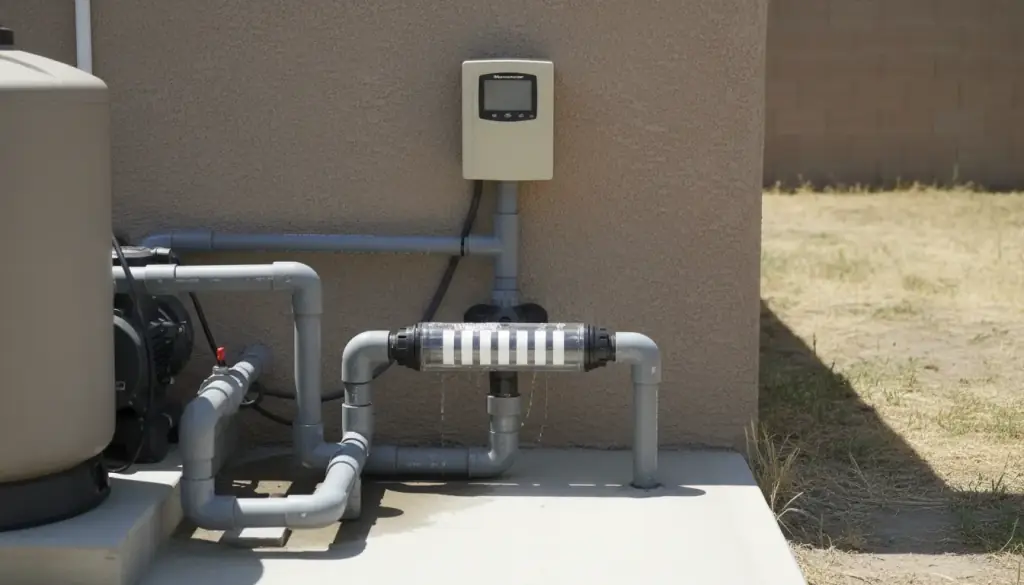
Salt chlorine generator cell mounted in grey PVC pool plumbing on an equipment pad
What a salt pool visit covers
The stop starts with the numbers. Salt level, pH and alkalinity get tested and written down, because a salt pool only works inside a fairly narrow window, and the three readings lean on each other. If one is off, the other two usually follow it.
Then comes the equipment. The chlorine generator cell gets cleaned, and the filter gets the same treatment any pool filter does: cartridges cleaned, or a sand filter backwashed, so water moves the way it should. Algaecide goes in where the water calls for it, and the visit ends with a second round of water testing, so the pool is left balanced rather than merely tidied.
Chapter 03
Why the cell decides how the pool behaves
The generator cell is the part that turns salt into chlorine, and it scales up. Mineral deposits build on its plates, and a scaled cell makes less chlorine than the controller claims it is making. The display can read healthy while the water slowly loses its sanitiser, and the first sign owners see is a green tint in the deep end.
That is why the cell gets looked at on the route, not only when something breaks. If the output has dropped or the controller is throwing a warning, say so when you call (559) 679-5599, and it gets checked first. Most salt pools in Visalia and Tulare are fine with a weekly stop, and a pool with a cell that is ageing may want a closer eye.
"I recommend them to all of my family and friends." A testimonial from Mariah, a customer, published on the company's own website.