Salt water pools still need care: the salt cell, pH and scale
Salt makes the chlorine instead of replacing it, and the equipment that does that needs looking after.
October 20, 2026 · 4 min read
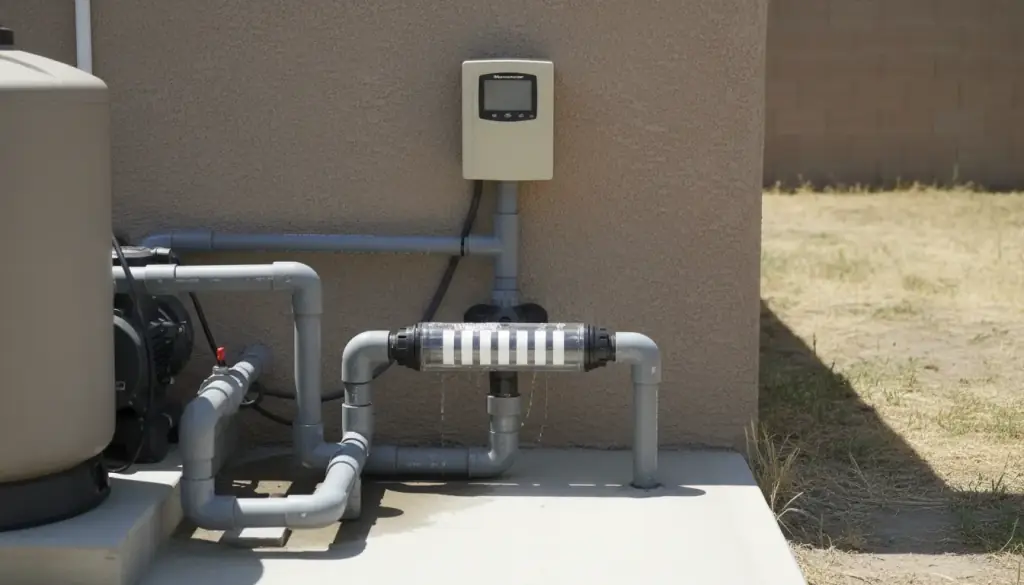
People often buy or inherit a salt water pool believing it's the low-effort kind: no chlorine to haul home, softer water, nothing to think about. The softer feel is real. The nothing to think about part is where owners get surprised. A salt water pool is still a chlorine pool. It just manufactures its own chlorine, and the equipment that does that, along with the water it works in, needs regular attention.
What the salt cell actually does
The pool holds a modest amount of dissolved salt. Water flows through a cell, usually mounted on the plumbing at the equipment pad, which contains metal plates. A low electrical charge passes across those plates and converts the salt into chlorine, which sanitizes the pool the same way chlorine from any other source does. Then the chlorine turns back into salt and the cycle repeats.
That's the appeal, because the system keeps making chlorine as long as the pump runs. But it also means your sanitizer is only as good as the cell. If the cell is worn, dirty or the salt level is off, chlorine production drops, and the pool can slide toward algae while the controller says everything is fine.
Salt level and the controller
The system needs the right amount of salt in the water to work. Too little and the cell can't make enough chlorine. Too much can stress the equipment. Salt doesn't evaporate, so it only drops when water is lost to splash-out, backwashing, or heavy rain and refilling, which means it should be checked rather than assumed. Many controllers show a reading, but that reading can drift, and a separate test tells you whether to trust it.
Why pH keeps climbing
Here's a quirk of salt systems: the process tends to push pH upward over time. Owners notice they keep having to bring the pH down, again and again. That's normal for this kind of pool, not a sign something is broken, but it has consequences if ignored. A high pH makes chlorine less effective, so the pool can get cloudy or grow algae even while the cell is running hard.
Alkalinity matters here, too. It buffers the pH, and keeping it in balance makes the pH easier to control. Regular testing of salt, chlorine, pH and alkalinity is what keeps a salt pool predictable. The pools that go wrong are mostly the ones where nobody tested for a month.
Scale: the white crust on the cell
The other long-term issue is scale. When pH and calcium run high, minerals come out of the water and deposit on surfaces, and the cell plates are where it happens most, since they're exactly where the electrical charge is working. A white or gray crust on the plates insulates them, so the cell makes less chlorine and works harder doing it.
Scale also shows up as a rough, chalky layer on the tile line, on the plaster and on the equipment. In a dry valley, where evaporation concentrates minerals in the water over time, it's a recurring issue. Keeping pH and alkalinity in balance slows the buildup, and the cell gets inspected and cleaned when scale shows. A cell isn't a forever part, and scale buildup is a common reason cells wear out early.
What regular care looks like
Salt water maintenance is the same fundamentals as any pool plus some extras. The surface gets skimmed and the baskets emptied. The walls get brushed. The filter gets backwashed or cleaned, because a salt pool still collects debris. And the chemistry gets tested, with salt included.
- Test salt, chlorine, pH and alkalinity, and correct what has drifted
- Inspect the salt cell for scale and clean it when needed
- Backwash or clean the filter so water keeps moving
- Add algaecide when conditions call for it
- Check the equipment pad for corrosion, leaks and unusual noise
One more point: salt can be hard on certain materials around the pool, such as some natural stone, metal fixtures and ladders. Rinsing splashed areas and keeping an eye on hardware prevents small surface damage from turning into a repair.
Knowing when to call someone
If the controller shows an error, chlorine production seems low, the water is cloudy despite a running cell, or you can see a crust on the cell, it's time for a professional look. Waiting turns an inexpensive cleaning into a replaced cell.
Crystal Blue Pool Service and Spa services salt water pools in Visalia, Tulare, Hanford, Lemoore and Porterville, monitoring salt, pH and alkalinity, cleaning the chlorine generator, backwashing the filter, adding algaecide and running water tests. See /salt-water-pool-maintenance or call (559) 679-5599.
Crystal Blue Pool Service and Spa, (559) 679-5599
Call (559) 679-5599More articles
What a weekly pool service visit actually covers
Most of a good weekly visit is catching small things while they're still small, and the schedule matters more than people expect once the heat arrives.
How a green pool gets brought back, and how to keep it from happening again
Green water looks like a disaster, but it follows a predictable recovery, and most of the work is in the order the steps happen.